Ashmans Wood is a new woodland planted in 2023/24 under the England Woodland Creation Offer (EWCO) overseen by the Forestry Commission. Covering 2.1 hectares, we’ve planted 20 UK native species—Oak, Holly, Hornbeam, and more, to ensure year‑round interest.
Note: While Horse Chestnut and Sycamore aren’t strictly native, they are now naturalised and enhance woodland diversity.
The First Year 2024
Over the past year, Ashmans Wood has shown strong growth across most tree species, with particularly healthy growth from the Horse Chestnut and Willow trees.
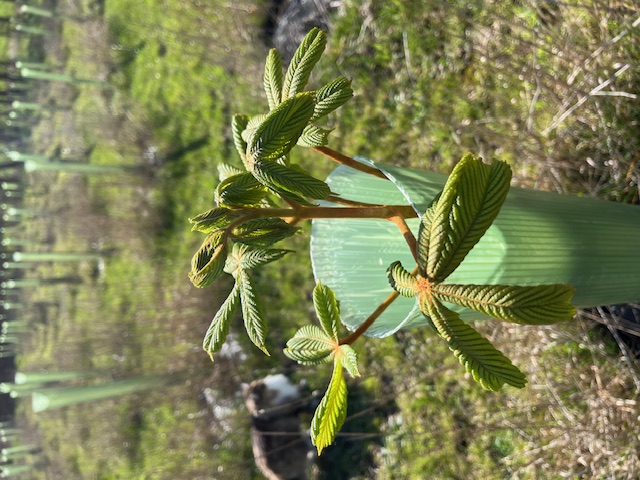
We have seen new wildflowers starting to appear and a good mix of different grasses. We have also noticed a good variety of birds and especially butterflies and bees. Birds that have been noted include :
- Linnet
- Chiffchaff
- Blackbird
- Skylark
- Bullfinch
- Dunnock
- Water Rail
- Pheasant
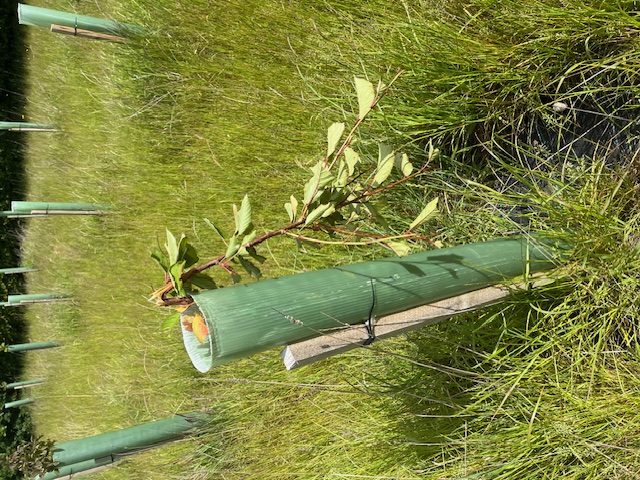
The rate of failures for the first year has been quite low at less than 4% of all trees planted. The long and wet spring in 2024 really helped to establish the saplings and the mild winter did not seem to provide too much of an issue. All the failed saplings were replaced before end of February 2025.
backThe Second Year 2025
Ashmans Wood is now beginning to establish, with healthy growth from all trees, the best being Horse Chestnut, Cherry, Hawthorn and Willow trees.
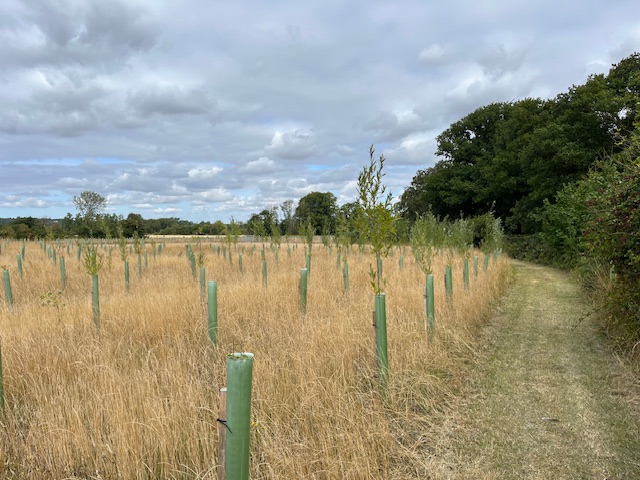
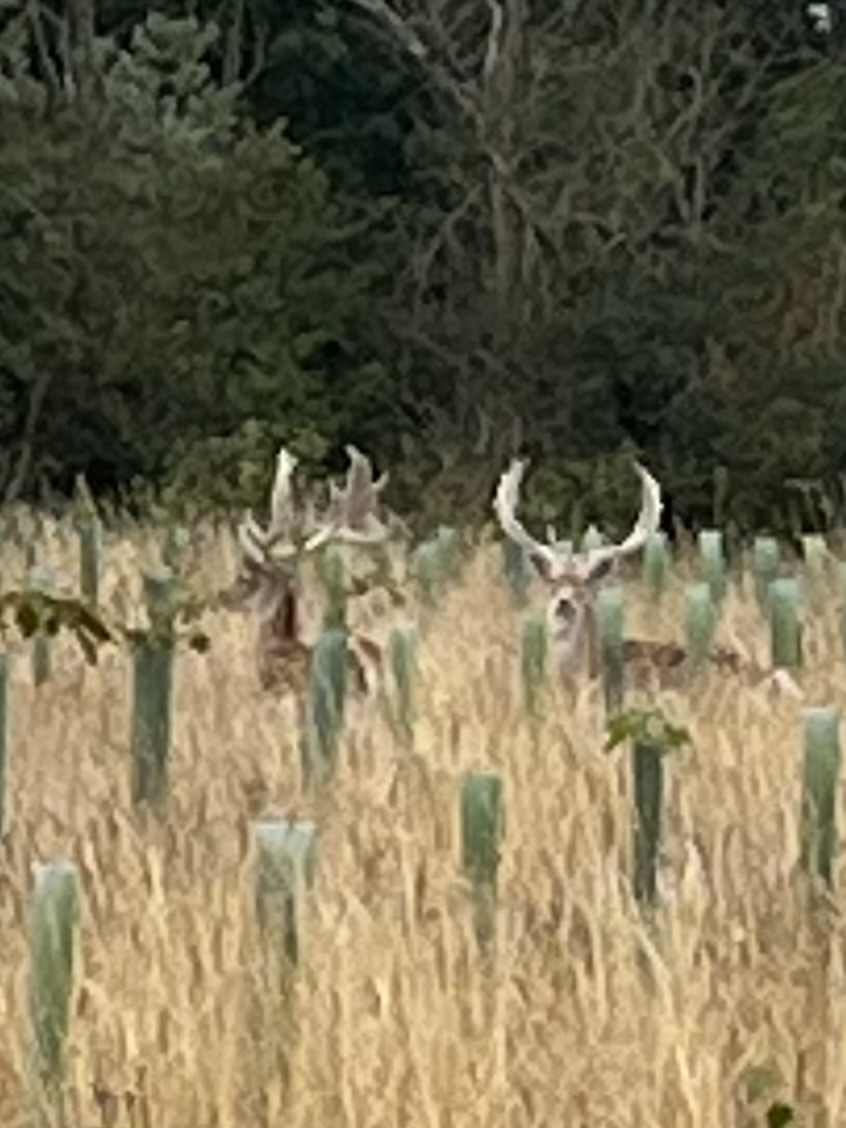
We continue see an increase in new wildflowers as well as increased amounts of existing ones (dandelions especially!). Wildlife has continued to establish amongst the trees with a family of partridges, muntjac deer and two resident hares. Unfortunately, we are also seeing some interest from larger deer as well, resulting in quite a lot of damage to the Cherry and Willow trees this spring. During the summer months a pair of Stags decided to stay in the field during Harvest time, which did result in quite a few damaged trees and tree protectors as they were used as rubbing posts for the new antlers!
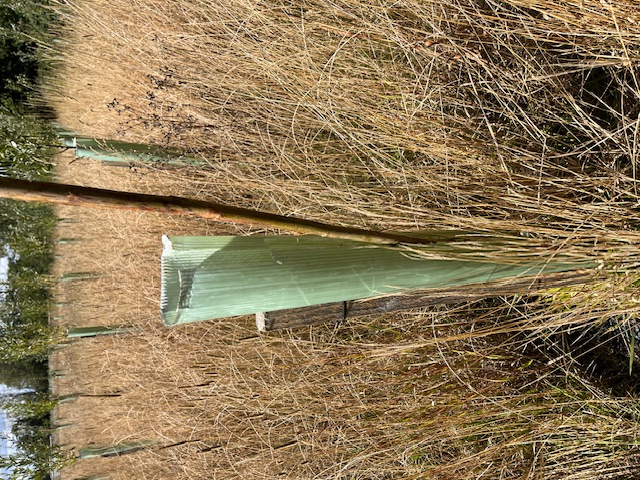
The failure rate for the second year has increased but is well below expectations after the adverse weather conditions during 2025. 2025 proved to be a very dry spring, summer and autumn which did place a great strain on all the trees. Thankfully the winter was quite mild and wet so 2026 seems to be off to a good start. The most common failure was the Alder (as it was the year before) so we decided to replace any failed Alder with Sweet Chestnut instead. Hopefully the Sweet Chestnut will prove a little more resilient. All the failed trees were replaced during December 2025.
backThe Trees
Each sapling is planted 2.5 m apart and protected in green tree guards shielding them from rabbits, pigeons, and deer for the first 3–5 years. The tubes also act like mini‑greenhouses, aiding upward growth.
Taller species occupy the centre, with smaller trees around the perimeter, creating a graduated treeline. Species selection matches soil moisture—White Willows in the wet northeast corner, for instance.
We aimed to design for multi-seasonal interest: blossom in spring, lush texture in summer, vibrant colour in autumn.
- Spindle
- Dogwood
- Blackthorn (Sloe)
- Hawthorn
- Hazel
- Field Maple
- Holly
- Common Alder
- Small‑Leaved Lime
- Hornbeam
- Beech
- Aspen
- Wild Cherry
- English Oak
- White Willow
- Horse Chestnut
- Sycamore
- Walnut
- Silver Birch
- Sweet Chestnut
Care & Recycling
At each tree’s base is a plastic mulch mat to suppress weeds and retain moisture. No manual watering is needed, as roots access groundwater.
Tree guards and mats will be collected and recycled later. Plastic pegs biodegrade after 5‑7 years and don’t require removal. Failed saplings will be replaced during the first five years; after that, nature takes its course.
backTobitt’s Farm (Historical Site)
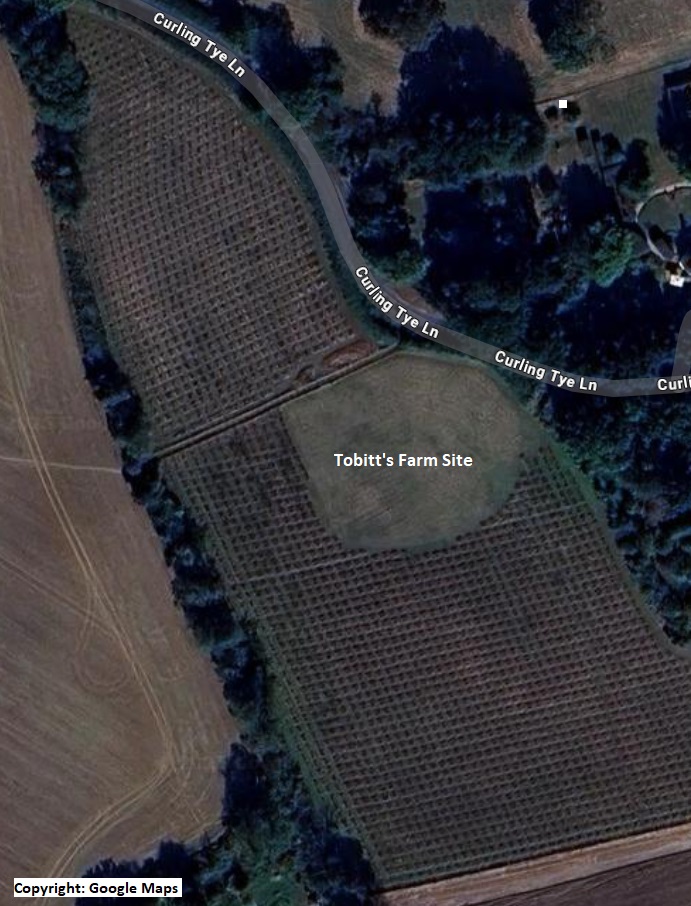
The roadside area by the hedge and gate remains unplanted. It marks the former medieval/post‑medieval Tobitt’s Farmstead, a protected site per Maldon District Council. It must remain undisturbed for potential archaeological survey.
Further Reading
backContact Us
Email us with any questions or comments: